Inside Shanghai’s iPhone City – Life, Work, and Dreams in Rocket Village
Just 5 kilometers from Shanghai Disney Resort is a factory village with 100,000 workers. By day, they build iPhones. By night, they get tattoos, hang out in internet cafés, and dream of another life.
Originally published by SandwiChina in Chinese
By Lianchao LAN
“Hey girl,” a man on a scooter calls out, as he stubs out his cigarette. “Coming for a job interview?” He’s the third person to approach me in 20 minutes.
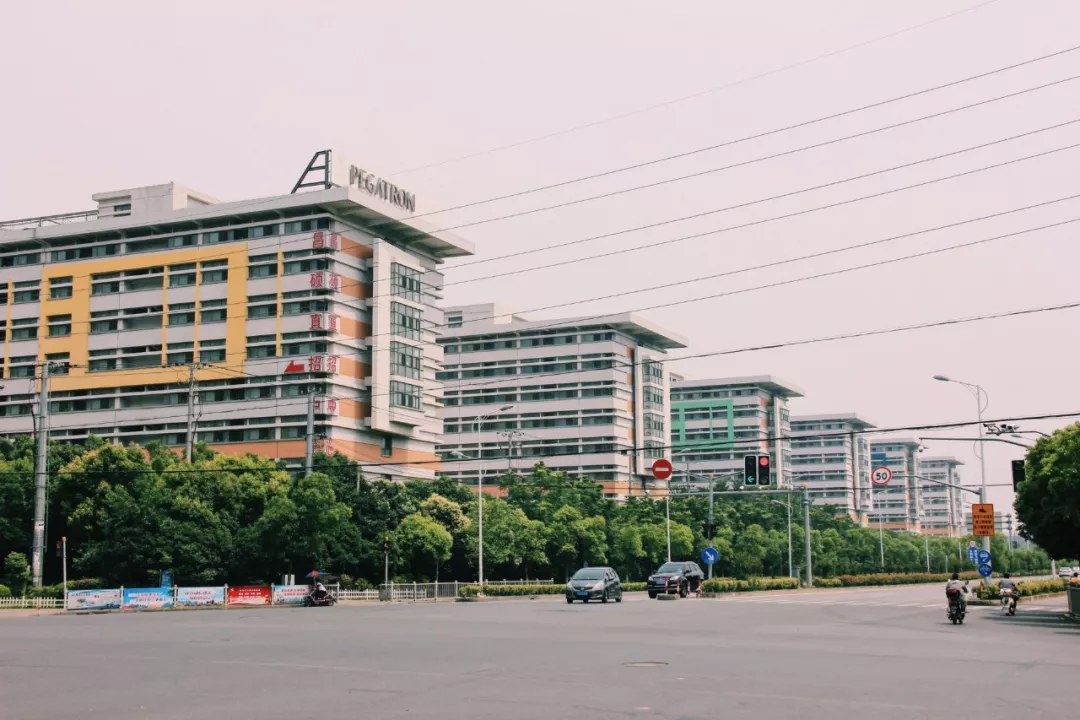
Recruiters fill the sidewalks of Xiuyan Road, here in Huojian Village—literally “Rocket Village”—in southeastern Shanghai. That’s because 3668 Xiuyan Road is the home of Changshuo Electronics, a subsidiary of Taiwan’s Pegatron Group, an original equipment manufacturer for Apple, along with its more famous competitor, Foxconn.
The Changshuo factory in Pudong District is only 7 kilometers from the city’s inner ring road—even closer to downtown Shanghai than Disneyland, and more than three times bigger. Though Rocket Village only has 1,000 registered residents, the population swells each year in the peak season before a new iPhone model is released. Then, 100,000 migrant workers pour into the village, which they simply call “Changshuo.”
Reel Them In
The “hey girl” came from 26-year-old Wang Xiaoli. Born in Puyang, Henan Province, he arrived here five years ago after escaping a pyramid scheme in Guangxi Province.
All he had was his national ID card. Not a cent on him; even his phone was on mortgage. “They cheated me and took every last piece of shit,” Wang spat in anger.
He boarded a free one-way bus to Changshuo for direct hires. But when he arrived, he realized he didn’t have the 50 yuan (around $7.20) needed for the compulsory health check, so he spent three days collecting bottles for recycling until he had the cash.
The rest of the hiring process went smoothly. Basically, as long as you know the English alphabet and don’t have any serious diseases or visible tattoos, anyone can get an “ordinary worker” position that pays 3,000 to 4,000 yuan per month. The factory provides lodging—6 to 8 people to a room—for just 160 yuan per month, and there are canteens serving cheap meals within the factory.
But after just a few days of work, Wang couldn’t hack it anymore. He decided to join a friend running a protection racket in northeastern Shanghai’s Wujiaochang. He would swagger into a small store with two of his cronies, stamp one foot onto a chair, and demand money. If the owner didn’t pay up immediately, they would start to smash the wares and beat him up.
“Why don’t they call the police?” Wang raised his eyebrows and smiled, “It’s my friend’s shop. We put on the show for the neighbors, so that next time, they’ll fork it over without hesitation.”
Unfortunately for him, the shops he targeted soon closed due to poor revenue. Soon he’d lost everything again and had to go back to Changshuo. But he didn’t last long the second time around either.
The money wasn’t nearly enough to achieve his dream of making half a million yuan before turning 30, getting married, and starting a family.
The second time he left the factory, he started up a barbeque street food stall, but local government officials chased him out. So he started working as a recruiter, making use of his skill in sweet-talking strangers. For each successful candidate he refers, Wang earns a commission that can be as high as several thousand yuan.
It’s enough for him to find two or three recruits each day. But on this chilly, early spring day, no one responds to his solicitations. He runs his hands through his hair, streaked with blonde, as it catches the wind.
While Wang knows how to turn on the charm and brotherly camaraderie when approaching potential recruits and business partners, he also makes sure he gets his cut.
“People are like cabbage,” he explains. “They look fat. But when you peel the layers off, soon it’s all gone. I have to keep something for myself when teaching them.”
Love and Overtime
Rocket Village comes to life after 8 o’clock at night. A steady stream of workers in pink and blue uniforms flash their passes at a scanner and flow forth onto the buses that run to the dorms.
To protect confidential product information, iPhone manufacturers utilize facial recognition equipment to verify each employee’s identity. Metal detectors sound off if anyone is carrying a device with a camera, and workers have to put their belongings in a locker at the start of each shift. Inside, worker Li Wei says, there is no daylight, but the lights beam bright. Hundreds of whirring machines drown out the sound of human breathing.
Li is 34. He’d tried his hand at various businesses back in his hometown of Suizhou, Hubei Province, but none were particularly profitable, so he came to Shanghai after his divorce, knowing that both work and lodging were immediately available in Rocket Village. He’s now been working in the factory for more than a year, assembling part of the motherboard.
In spring, the factory only opens 20 production lines, some of which can produce up to 10,000 iPhones each day, but in the summer peak season, Li recalls that there were more than 60 lines, operating day and night with rotating shifts.
Li is a man of few words. Most of his answers to my questions are one or two words, mumbled into his dusty shoes. “So so,” he says, when I ask how he feels about working here.
Then he becomes more chatty and emotional. “The Taiwanese bosses love yelling at people. All of them, from the team leaders to the factory manager, yell at you so hard you want to cry,” he says.
“I don’t want to become a leader, I’m really worried about backstabbing. The turnover rate at a management level is even higher than among the workers. If you don’t have someone who has your back, it’s hard to survive.”
Newcomer Zhao Yixuan is a fiery 22-year-old who recently left the army. He joined Changshuo two weeks ago, and he believes his team has the toughest deal. Because it’s toward the end of the production line, they bear the brunt of the bosses’ aggression.
“Phones come down the belt, and if earlier problems aren’t picked up, it’s on us,” he explains.
Zhao is in charge of assembling the mute button and volume buttons on around 480 phones each day. For a newcomer like him, it’s a bad look if he makes more than 20 errors, but two to four is fairly normal. On a good day, he can manage to get through without any mistakes at all.
With a six-day working week and up to 12 hours each day, factories like Changshuo and Foxconn are often seen as sweatshops that drive their workers to stress, depression, and even suicide.
In 2014, BBC sent three undercover journalists to cover Changshuo. The documentary they produced, “Apple’s Broken Promises,” reported that a normal workday was 12 hours while the longest shift one of them experienced was 16 hours.
Another reporter worked straight for 18 days. Apple responded that the company had forbidden its manufacturers from asking staff to work for more than 60 hours a week.
Li says that he works from 8:30 a.m. to 8:00 p.m. with a 50-minute break for lunch and a 30-minute break for dinner. He also has 10-minute breaks in the morning and afternoon, which puts his working hours right at the edge of the 60-hour limit. But he says that as the starting salaries in most factories are more or less the same, the only way to earn more is to take overtime.
Wang Xiaoli argues that overwork isn’t the main cause of despair and distress in the factory. With many more men than women, and hormones flying, an unintended look can turn into a fight. He describes some of the suicides as “Butterfly Lovers”—the Chinese story often compared to “Romeo and Juliet.”
Tattoos and More
The Changshuo factory opened in 2004, and a few years later, Yuan Kaixi opened his first tattoo shop in the night market near the factory.
Between stalls selling underwear, duck necks, and mobile phones, his cement-paved stall offered tattoos and online entertainment. Back then, few workers had smartphones themselves, so he would rip or download music, movies, and television shows that customers could buy and copy onto their own devices.
At the time, Heshuo produced ASUS notebooks and motherboards. When Apple launched the first iPhone in 2007, Foxconn was its exclusive original equipment manufacturer. But in 2012, Heshuo won part of Foxconn’s orders, and Yuan remembers that the number of workers in Changshuo surged to around 120,000 people.
Originally from Haozhou in Anhui Province, Yuan first moved to Shanghai’s Songjiang District and worked as a factory mechanic before taking a two-year tattooing apprenticeship. He opened his shop in Changshuo because he saw an opportunity in the captive market.
Yuan now runs three tattoo shops in the Changshuo night market. The unique environment of the iPhone city has proved fertile ground for his business. Most people here work in the same factory, wearing the same uniforms, and living in the same dorm rooms. Tattoos are one way to differentiate themselves.
Rumor has it that applicants have to pass an inspection with their clothes off before they’re hired as the company won’t employ anyone with tattoos. The bottom line is that they cannot have any tattoos bigger than the size of a business card, and they can only be in areas covered by clothes. But after a candidate is hired, they can do what they like as long as they can hide it.
During the day, while the shop is empty of clients, Yuan relaxes, outstretched in his chair and playing games on his phone while occasionally spitting out sunflower seeds. But when the door opens, he jumps up.
A man wearing a suit jacket on top and slippers on his feet comes in, asking to have his photo taken for his factory interview application. Yuan puts up a blue curtain and the tattoo shop transforms instantly into a mini photo studio. He shoots a photo on his phone and edits it in an app, changing the background to red in one version. He hands it to the customer with satisfaction, adding that the red one could get him a blind date.
In addition to tattoos and photo services, Yuan also sells personalized phone cases and provides ID card copying. There are many similar side businesses in Rocket Village. As you get closer to the factory, you find more and more ads.
Some offer falsified medical certificates for workers wanting to take sick leave. But the most popular businesses are the internet cafés. In the evening, off-duty factory workers file in and fill up each row.
Instead of the exhausted, glazed expressions they display on the manufacturing line, in the glow of the computer screens, they look fresh and focused, like model Marxist workers.
Three months later, I visited Rocket Village again in the summer. The area was cleaner, brighter, busier—fresh paint over the walls that had been crowded with peeling advertisements; new employees dragging their suitcases from the subway to the factory; and even a Starbucks, KFC, and McDonald’s.
Wang Xiaoli’s colorful hair had been dyed black. As he spotted a young woman walking with her luggage, he slid his scooter over with a familiar expression. “Hey girl,” he smiled, “Coming for a job interview?”