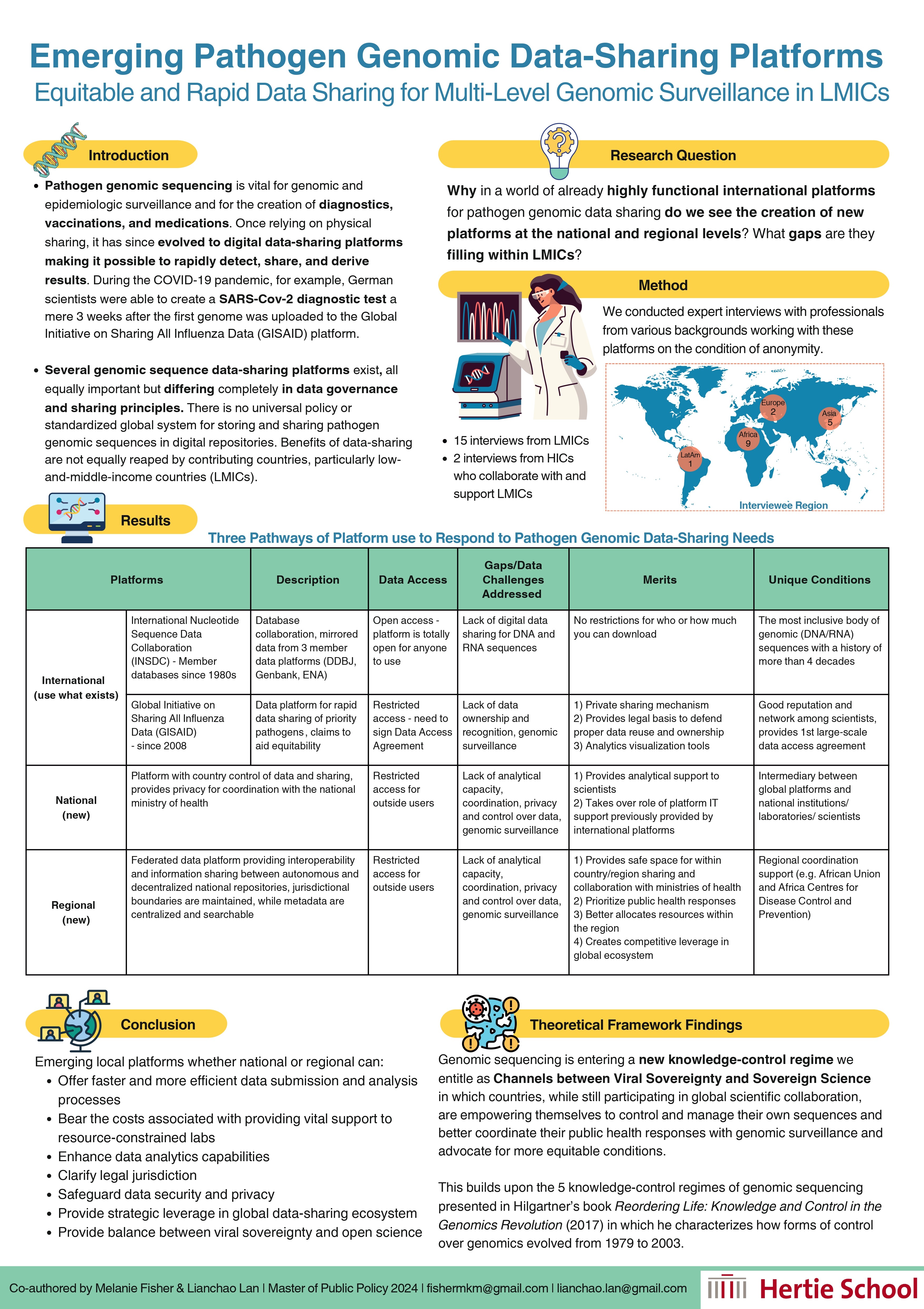
Emerging Pathogen Genomic Data-Sharing Platforms: Equitable and Rapid Data Sharing for Multi-Level Genomic Surveillance in Low-and-Middle-Income Countries
This interview-based study draws on insights from experts to examine the evolving landscape of pathogen genomic data-sharing platforms, with a focus on the unique challenges and opportunities faced by low-and-middle-income-countries (LMICs). Given the existence of platforms for global sharing of genomic data, the present study documents the reasons for the innovation of recent digital sharing arrangements linked to the specific needs of LMICs’ health policy and scientific communities.

EXECUTIVE SUMMARY
This interview-based study draws on insights from experts to examine the evolving landscape of pathogen genomic data-sharing platforms, with a focus on the unique challenges and opportunities faced by low-and-middle-income-countries (LMICs). Given the existence of platforms for global sharing of genomic data, the present study documents the reasons for the innovation of recent digital sharing arrangements linked to the specific needs of LMICs’ health policy and scientific communities.
The study identifies three key pathways for enhancing pathogen genomic surveillance through data-sharing platforms:
1) maintaining the use of existing global platforms like the International Nucleotide Sequence Database Collaboration (INSDC) and Global Initiative on Sharing All Influenza Data (GISAID);
2) developing national platforms to act as intermediaries between global platforms and national health authorities;
3) creating regional platforms for enhanced data control and competitive leverage in the global ecosystem. Emerging national and regional platforms are crucial for public health responses and appropriate data control tailored to the needs of LMICs.
The study draws on the theoretical framework of knowledge-control regimes to understand how “viral sovereignty” and “sovereign science” influence the development of LMIC platforms. Interview data with LMIC experts with experience in data sharing is synthesized in the present study to describe models of data platforms that could ensure effective public health responses and equitable, transparent data sharing. Additionally, the study highlights the contributions of emerging pathogen genomic initiatives across various regions such as Africa and Asia Pathogen Genomic Initiatives (PGIs) to genomic surveillance, while also noting significant communication and coordination challenges.
Policy recommendations deriving from the analysis of interview response and the literature include:
1) the creation of federated data platforms for standardized and efficient genomic data sharing;
2) the establishment of legal frameworks encompassing ethical and safe data sharing;
3) the establishment of mechanisms for benefit-sharing that honor the data contributions of LMICs;
4) the exploration of sustainable funding models;
5) the utilization of central knowledge hubs to enhance knowledge dissemination and global coordination. It suggests there is a leadership role to be filled in coordinating efforts to support harmonious global data sharing and multi-level genomic surveillance to meet future global health challenges.