Men and women’s education and first birth: Does welfare state context matter? A comparison of patterns in France and the UK
Compares France (conservative–corporatist welfare state) and UK (liberal welfare state) to investigate how educational attainment affects the timing of first births.
Research Aim & Context
Compares France (conservative–corporatist welfare state) and UK (liberal welfare state) to investigate how educational attainment affects the timing of first births.
France’s pro-natalist policies (generous maternity leave, childcare subsidies, tax breaks) help parents reconcile career and family life.
The UK’s limited childcare support increases the opportunity cost of childbearing, particularly for highly educated women.
Hypotheses
H1: Higher education delays first birth in both countries.
H2: The negative effect of education on first birth is stronger for women than for men.
H3: In the UK, highly educated individuals postpone first birth more than in France, with a larger gender gap, mainly due to women’s delay.
Data & Method
Source: European Social Survey (Round 9), cohorts born 1940–2003.
Sample: 3,802 individuals (France 48.3%, UK 51.7%), split into older (1940–1969) and younger (1970–2003) cohorts.
Analysis: Kaplan–Meier survival curves; Cox proportional hazards models (main effects + education–gender interaction).
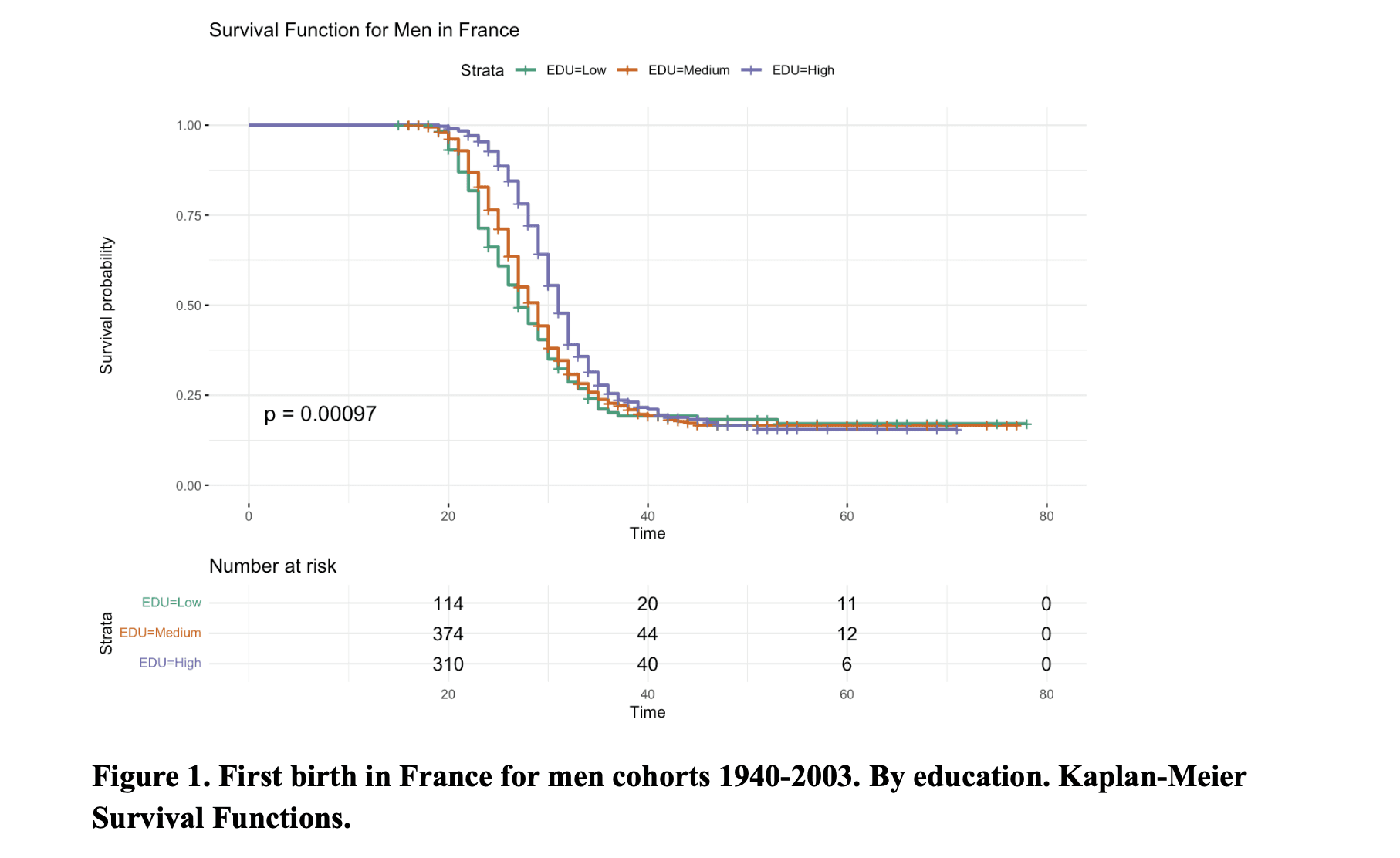
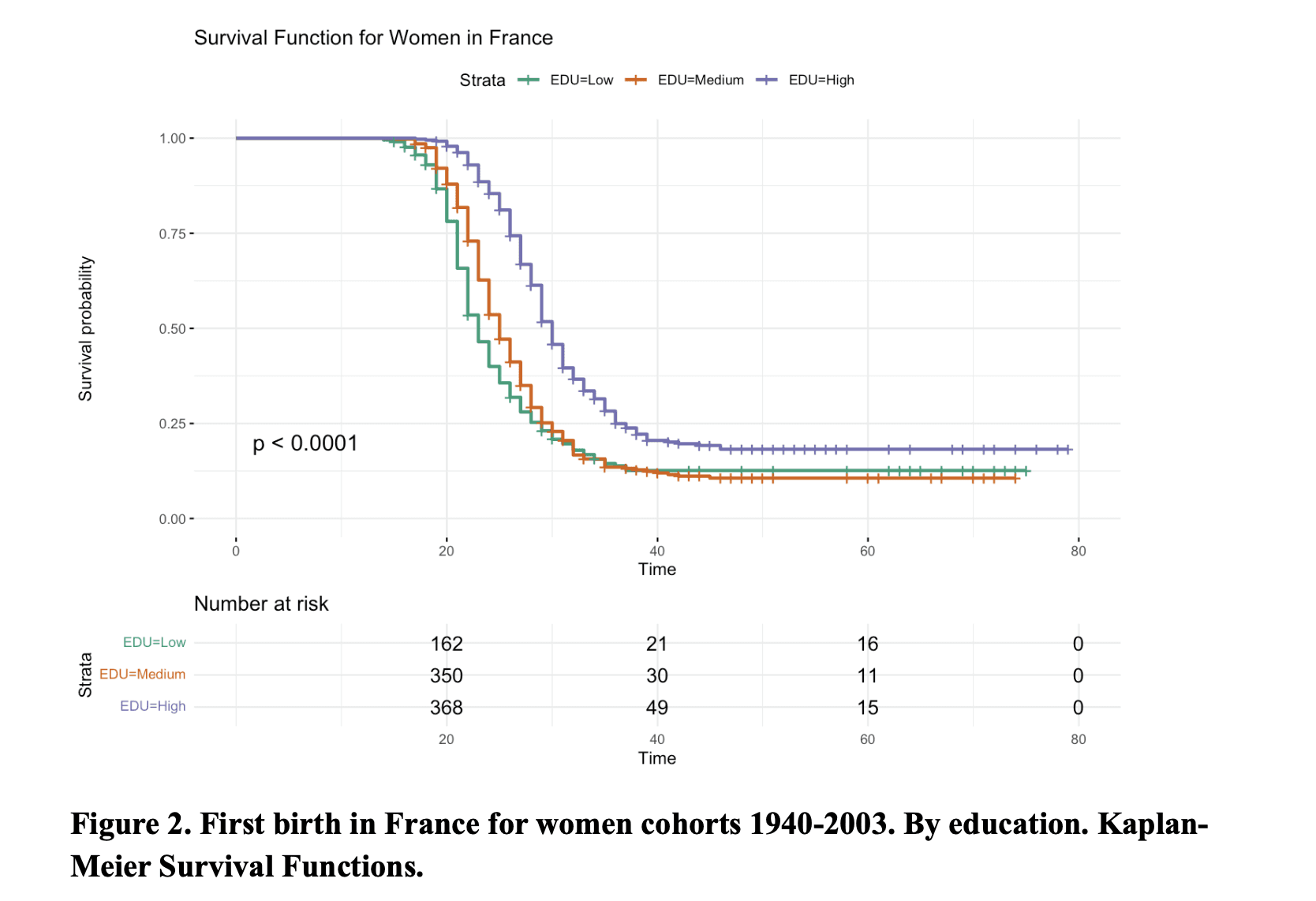
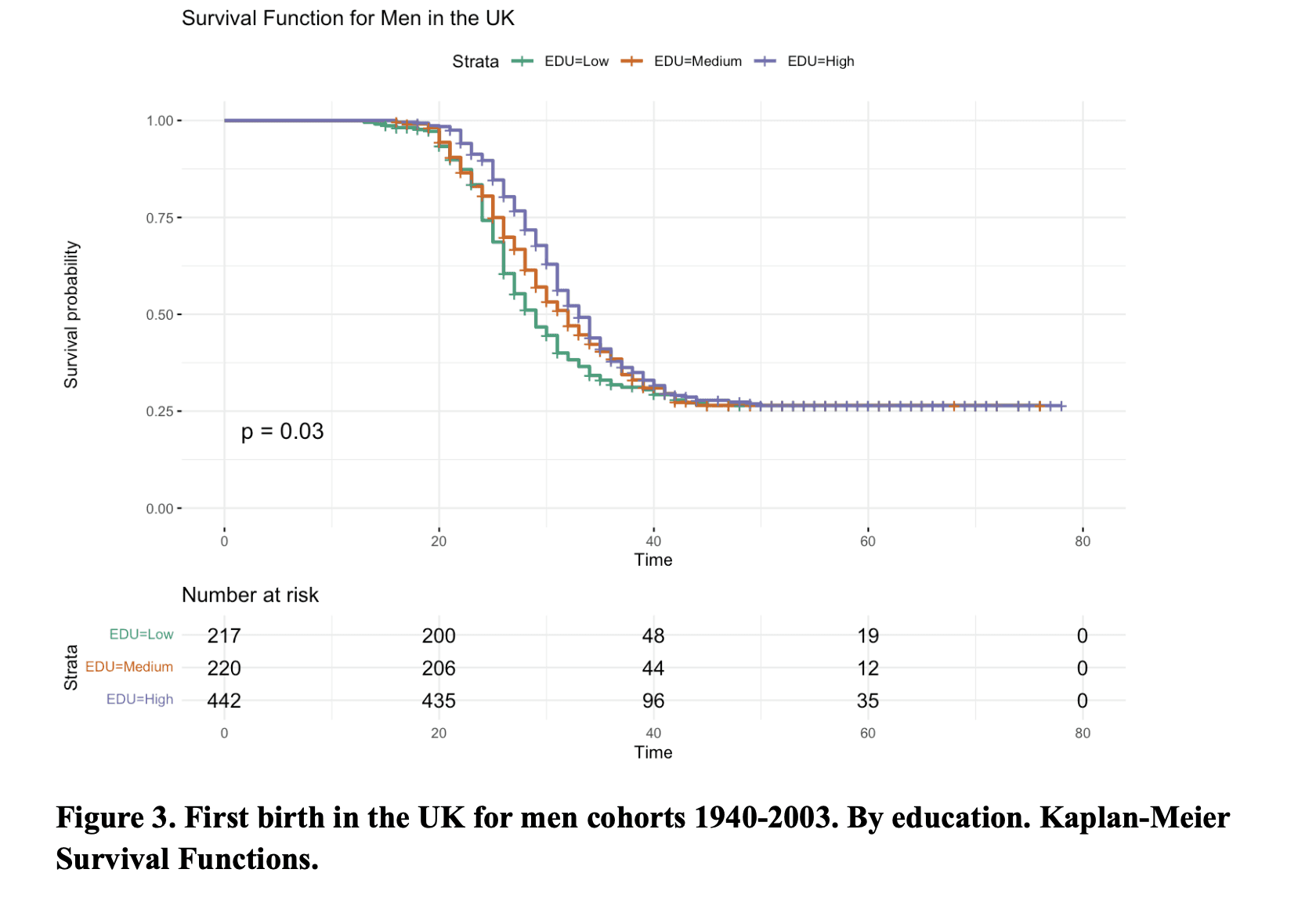
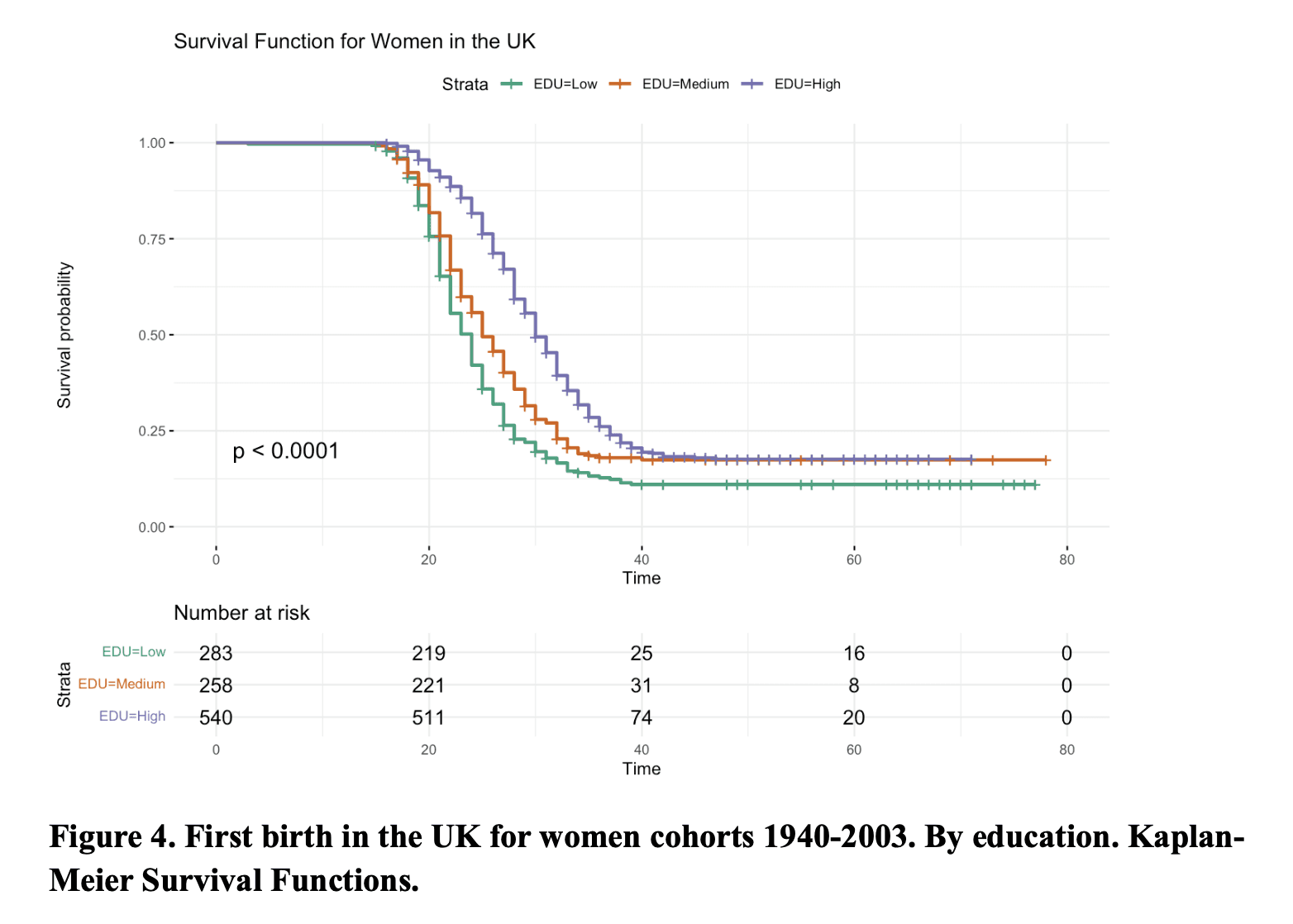
The survival curves below illustrate the timing of having had a first child by gender and by country, with the risk table showing the number of individuals at risk of experiencing first birth over time.
Regression results:
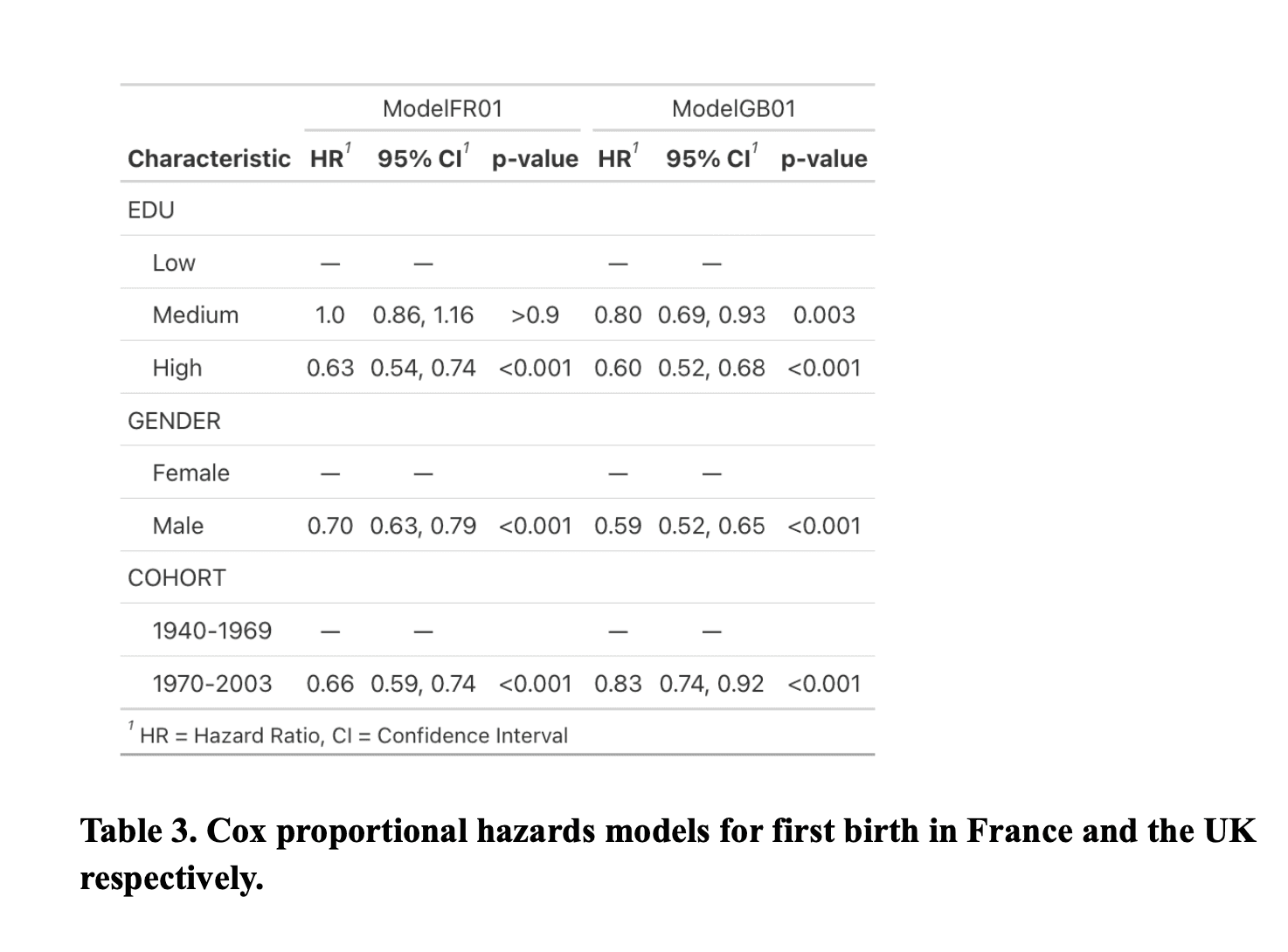
Table 3 shows that in both countries, individuals with higher education levels have lower hazard of having their first birth compared to those with low education. My first hypothesis is supported. Individuals in France with high education have a 37% lower hazard of first birth at any given time compared to those with low education. In the UK, the hazard is 40% lower for those with high education. Both effects are statistically significant. Regarding gender, in France, men have a 30% lower hazard of having their first birth at any given time compared to women while in the UK, men have a 41% lower hazard, both statistically significant. The results are not in line with my second hypothesis. For the cohort effect, in France, the younger cohort has a 34% lower hazard of first birth whereas in the UK, the younger cohort has a 17% lower hazard, again both statistically significant.
Model refinement (e.g. interactions, testing “effect heterogeneities”):
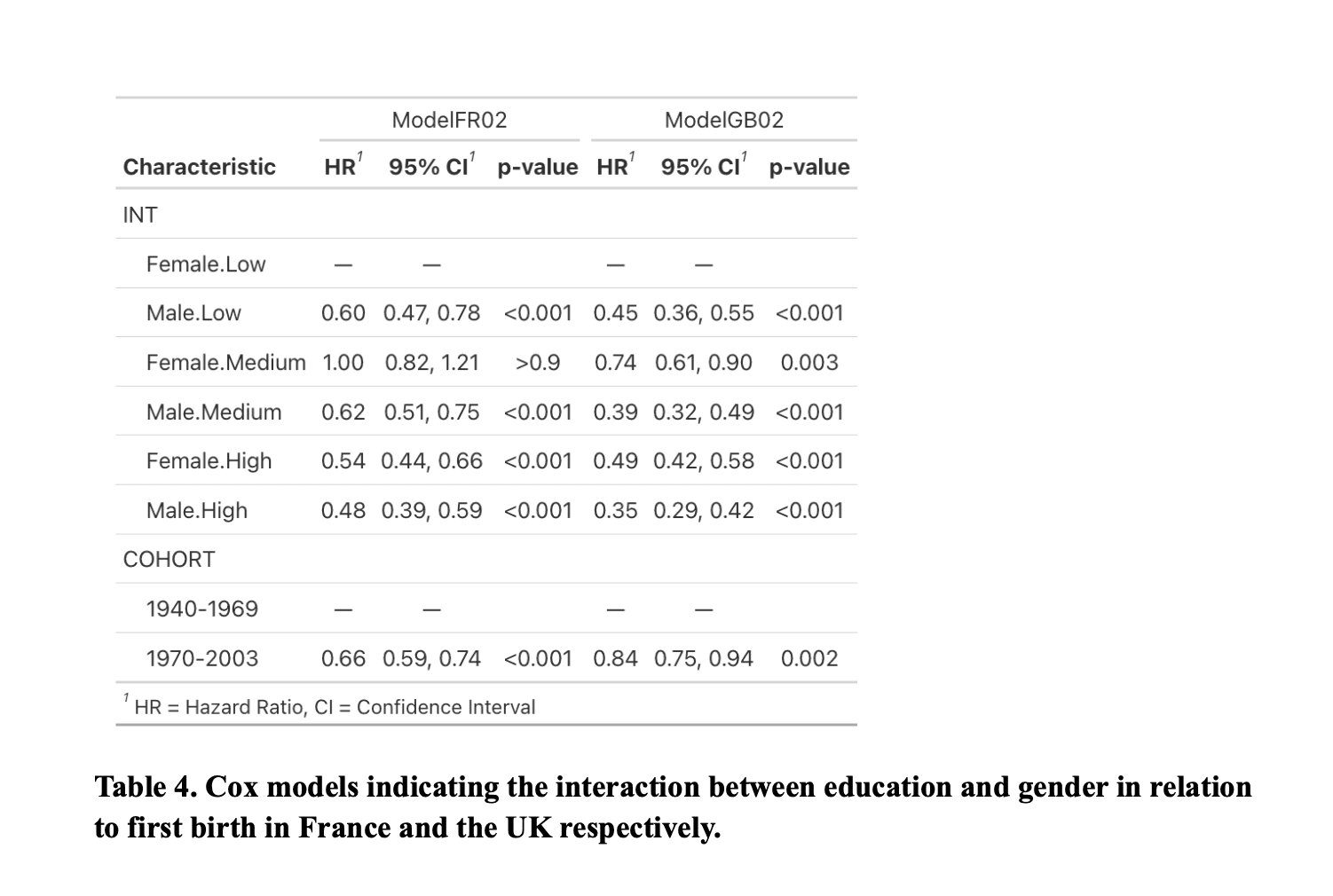
Table 4 presents the results that higher education is associated with a lower hazard of having a first birth in both France and the UK, and this effect is stronger for men than for women. The results further show that my second hypothesis is not supported.
Additionally, the younger cohort has a lower hazard of first birth compared to older cohort. As for the difference between France and the UK, the hazard ratios are lower for the UK than for France for both high-educated men and women, which partly supports the third hypothesis that first birth of individuals with high education is postponed more in the UK.
Findings
H1 supported: Higher education is significantly associated with lower hazard of first birth (France: –37%; UK: –40%).
H2 not supported: The postponement effect is stronger for men than for women.
H3 partially supported: The UK shows a stronger postponement effect for highly educated individuals, and the gender gap is wider — but mainly because men delay fatherhood more.
Younger cohorts delay first births more than older cohorts in both countries.
Policy Implications
UK should consider more supportive family policies (e.g., better-paid paternity leave, affordable childcare) to reduce career–family trade-offs.
Promoting shared childcare responsibilities could reduce gender gaps in first birth timing.